Vineyard NDVI Scanning in Willcox AVA: What Growers Actually See in the Data
What aerial vegetation data actually tells a Willcox AVA grower: how stress shows up 5-10 days before you can see it walking the rows, how block-level maps change irrigation scheduling, and how to use the numbers at harvest.
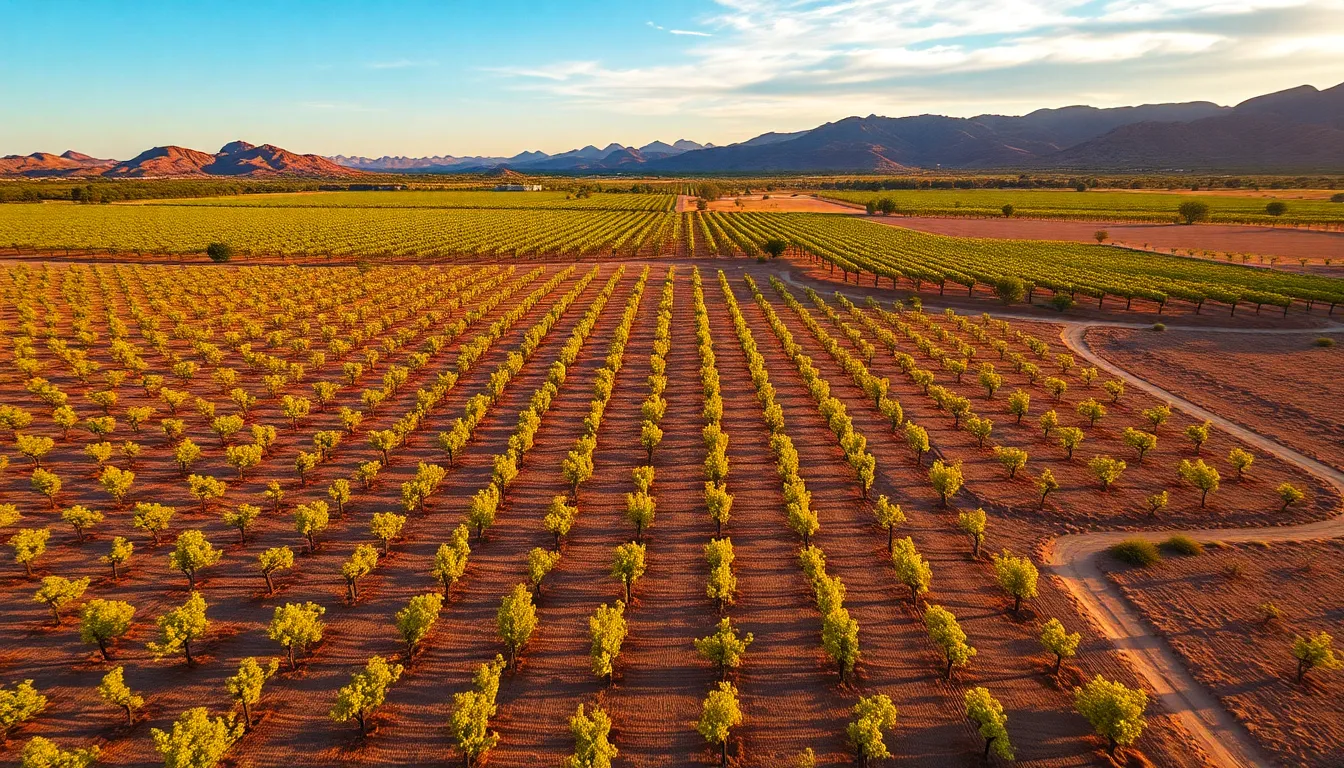
Arizona's Willcox AVA produces some of the country's most distinctive wines in one of its harshest growing environments. Intense heat, minimal rainfall, and UV radiation that would kill vines in softer climates create a unique terroir—but they also create management problems that traditional vineyard monitoring can't solve fast enough.
NDVI (Normalized Difference Vegetation Index) scanning from the air gives you what you need: a precise, data-driven map of vine stress across your entire property. Not guesswork. Not a walk-through at dawn. Actual numbers that tell you which blocks are struggling, where irrigation is failing, and where you're losing yield before harvest.
This is what the data actually shows you. And how you use it.
What NDVI Scanning Measures (and Why It Matters for Willcox Growers)
NDVI is a satellite and drone-based measurement that quantifies vegetation health by comparing how plants reflect red and near-infrared light. Healthy vines reflect more near-infrared light and absorb more red light. Stressed vines—whether from water deficit, pest pressure, or nutrient imbalance—reflect less near-infrared and more red. The sensor captures both wavelengths and calculates a single index value for every pixel in your vineyard.
The result is a color-coded map. Green and bright yellow zones show vigorous vines. Orange and red zones show stress. Blue or gray zones show dead or severely compromised plants.
For Willcox AVA growers, this matters because Willcox heat stress doesn't announce itself with visible wilting until damage is already done. By the time you see it walking the rows, you've lost days of irrigation response time and potential yield. NDVI data catches stress 5–10 days earlier, when intervention still works.
You get a baseline map early in the growing season (late May or early June), then repeat scans every 10–14 days through véraison. Each scan is georeferenced, meaning every pixel has GPS coordinates. You can zoom into a specific row, cross-reference it with your irrigation zones, and adjust water delivery block-by-block instead of field-wide.
How Willcox Growers Use the Data in Real Decisions
NDVI data isn't academic. It drives irrigation scheduling, nutrient decisions, and harvest timing—the three levers that determine yield and wine quality in the AVA.
Irrigation response. Willcox summers are dry. Most vineyards rely on drip irrigation, and emitter failure, soil variability, and heat-driven transpiration rates mean some blocks dry out faster than others. NDVI scanning reveals exactly which zones are water-stressed. Instead of irrigating the whole vineyard on a fixed schedule, you irrigate the stressed blocks more frequently and reduce water to vigorous zones. This saves water (critical in Arizona), prevents over-vigor in some blocks, and maintains consistent fruit quality across the property.
Nutrient and pest management. Stressed vines often show multiple problems at once: water deficit, nitrogen deficiency, and powdery mildew pressure all correlate with lower NDVI values. The scan alone doesn't tell you which problem is primary, but it tells you where to look. You can then scout those specific blocks for mites, mildew, or leaf chlorosis instead of walking 40 acres blindly. This focus saves spray costs and reduces unnecessary fungicide applications.
Harvest decisions. Willcox fruit develops fast in extreme heat. Growers often harvest in multiple passes to catch different ripeness levels across the vineyard. NDVI data from late August or early September shows which blocks are truly mature versus which are still pushing vigor. Blocks with lower NDVI values (stressed, smaller canopy) often have more concentrated fruit and may reach target Brix earlier. You can harvest those blocks first, then return to vigorous blocks when they catch up. This staged approach improves wine quality by matching harvest timing to actual fruit maturity, not calendar date.
The Practical Output: What You Actually Receive
When Stronghold Precision Aerials completes a vineyard NDVI scan, you receive:
Georeferenced NDVI raster map. A high-resolution color-coded image of your entire vineyard, with every pixel tagged with GPS coordinates. You can overlay it on your irrigation map, your soil map, or your harvest block boundaries. Most growers load this into their vineyard management software (Vinesmart, Winebook, or similar) to track changes over time.
CSV data export. Raw NDVI values for every zone, block, or management unit you've defined. If your vineyard is divided into 12 blocks, you get 12 rows of data: average NDVI, min/max, pixel count, and spatial statistics. This data feeds directly into your irrigation controller or your decision-making spreadsheet.
Thermal overlay (optional). If you request it, we also capture thermal imagery showing canopy temperature. In Willcox heat, canopy temperature correlates with water stress—cooler canopies indicate adequate water, hotter canopies indicate drought stress. Thermal + NDVI together give you redundant confirmation of water status.
Written summary. A brief report noting which blocks show stress, which show vigor, and which zones warrant immediate attention. No fluff. Just observation and recommendation.
The entire deliverable is yours to keep and use however you need. You own the data. You can share it with your vineyard manager, your agronomist, or your winemaker. You can compare year-to-year scans to track long-term vine health trends.
Timing: When to Scan During the Willcox Growing Season
Willcox's growing season runs roughly May through September. NDVI scanning is most useful during active vine growth and fruit development, not dormancy.
Early season (late May – early June). Baseline scan after bud break and initial shoot growth. This establishes your vineyard's vigor baseline and reveals any winter damage, replant issues, or soil variability that affects early-season growth. Use this scan to calibrate irrigation before peak heat arrives.
Mid-season (late June – mid-July). Flowering and early fruit set. NDVI at this stage shows which blocks are under stress during the critical flowering window. Stress during flowering reduces fruit set, so early detection allows you to adjust water and nutrition before damage compounds.
Late mid-season (late July – early August). Fruit development and véraison approach. This scan shows which blocks are tracking toward maturity and which are lagging. Use this data to plan harvest logistics and adjust final irrigation decisions.
Pre-harvest (late August – early September). Final scan before harvest. Shows mature versus immature blocks, helps you schedule multiple harvest passes, and gives you one last look at any pest or disease pressure before picking begins.
Most Willcox growers scan every 10–14 days during the growing season. That's typically 4–5 scans per year. Some years, if drought pressure is severe or pest pressure is high, they increase frequency to weekly scans for 2–3 weeks.
Cost and Turnaround
Stronghold Precision Aerials charges per-scan, not per-acre. A single NDVI scan of a Willcox vineyard (typically 40–120 acres) runs $400–$800 depending on block configuration and deliverable complexity. Thermal overlay adds $150–$250.
Turnaround is 3–5 business days from flight to final deliverable. Weather (wind, dust, cloud cover) can delay flights, but we maintain a flexible schedule to catch optimal conditions.
If you commit to a seasonal contract (4–5 scans over May–September), we offer a 15% discount on per-scan pricing. That brings a full season of NDVI monitoring to roughly $1,700–$3,400 for a typical Willcox property.
Compare that to the cost of a single irrigation miscalculation in Willcox heat—one week of over- or under-watering a 60-acre block can cost you $800–$1,200 in water, plus yield loss or fruit quality degradation worth thousands more. NDVI data pays for itself in the first irrigation adjustment.
Why Drone NDVI Beats Satellite or Ground-Based Monitoring
You might already subscribe to satellite NDVI data (Sentinel-2, Planet Labs, etc.). Satellite data is cheaper per image but has critical limitations in Willcox.
Satellite imagery refreshes every 5–10 days at best, and cloud cover in monsoon season (July–August) can wipe out 2–3 weeks of data. Drone scans give you on-demand coverage: if monsoon clouds clear on a Thursday afternoon, you fly Friday and have data by Monday. Satellite makes you wait for the next scheduled pass.
Satellite resolution is 3–10 meters per pixel. That's fine for detecting block-level stress but useless for identifying specific rows or irrigation zones within a block. Drone NDVI delivers 1-inch pixels, so you can see individual vine rows and pinpoint problem zones to within a few feet.
Ground-based monitoring (walking the vineyard, taking leaf samples, measuring soil moisture) is accurate but doesn't scale. You can scout 5–10 acres per day. A 60-acre vineyard takes two weeks to walk thoroughly. NDVI data covers the same 60 acres in 20 minutes of flight time.
Getting Started with Stronghold
If you're managing a Willcox AVA vineyard and you're tired of guessing at irrigation and harvest timing, NDVI scanning is the fastest way to move from reactive management to data-driven decisions.
Contact Stronghold Precision Aerials for a consultation. We'll discuss your vineyard layout, your current management challenges, and the scan frequency that makes sense for your operation. We'll schedule your first flight for optimal growing conditions and deliver data within days.
Our FAA-certified pilots specialize in vineyard NDVI scanning throughout the Willcox AVA and surrounding regions. We have the equipment and experience to capture the data you need and deliver it in formats your vineyard management software can use immediately.
Call now to schedule your first NDVI scan and see exactly what your vineyard is telling you about vine health, water status, and harvest readiness.
Agriculture & Vineyard Analysis
Aerial vegetation and crop stress mapping for vineyards, orchards and farmland in the Willcox AVA and Sulphur Springs Valley. Block-level scouting, irrigation assessment and season subscriptions.
See what is includedWorking on something in Cochise County?
Part 107 certified, insured, and based in the Sulphur Springs Valley — so there is no travel surcharge on work in the valley, and no LAANC delay across most of the county. Tell us what you need flown.
Keep reading
What Drone Services Actually Cost in Cochise County
Published rates for real estate, land, construction, inspection, agriculture and mapping in Cochise County and the Tucson metro — plus why rural pricing is not cheaper than Phoenix, and what actually drives the number on a land job.
Airspace & RegulationFlying Near the Electronic Proving Ground: GPS and RF Interference in Southern Cochise County
Fort Huachuca is one of the few places in the country cleared for open-air GPS testing, and the terrain that makes it suitable is the same terrain your listing sits in. What that means for a drone, and how we fly differently because of it.
AgricultureCenter Pivot Inspection From the Air in the Sulphur Springs Valley
A blocked nozzle, a leaning tower or a wheel track cutting a rut does not announce itself from the pickup. On 108,237 irrigated acres in a basin under an AMA, uniformity is now a compliance issue as well as an agronomic one.
Real EstateDrone Photography for Tucson Listings: Class C, Davis-Monthan and the Shelf
Tucson International and Davis-Monthan share one Class C, and the outer shelf reaches further than most people expect. What that means for scheduling a listing shoot in the metro, and where the automated approvals stop.