Drone Photography for Construction Sites: A Complete Guide to Aerial Documentation in Arizona
How construction companies in Arizona use drone photography for site documentation, stakeholder reporting, marketing, and safety compliance. Learn what to expect, what it costs, and how aerial imagery saves time and money on every project.
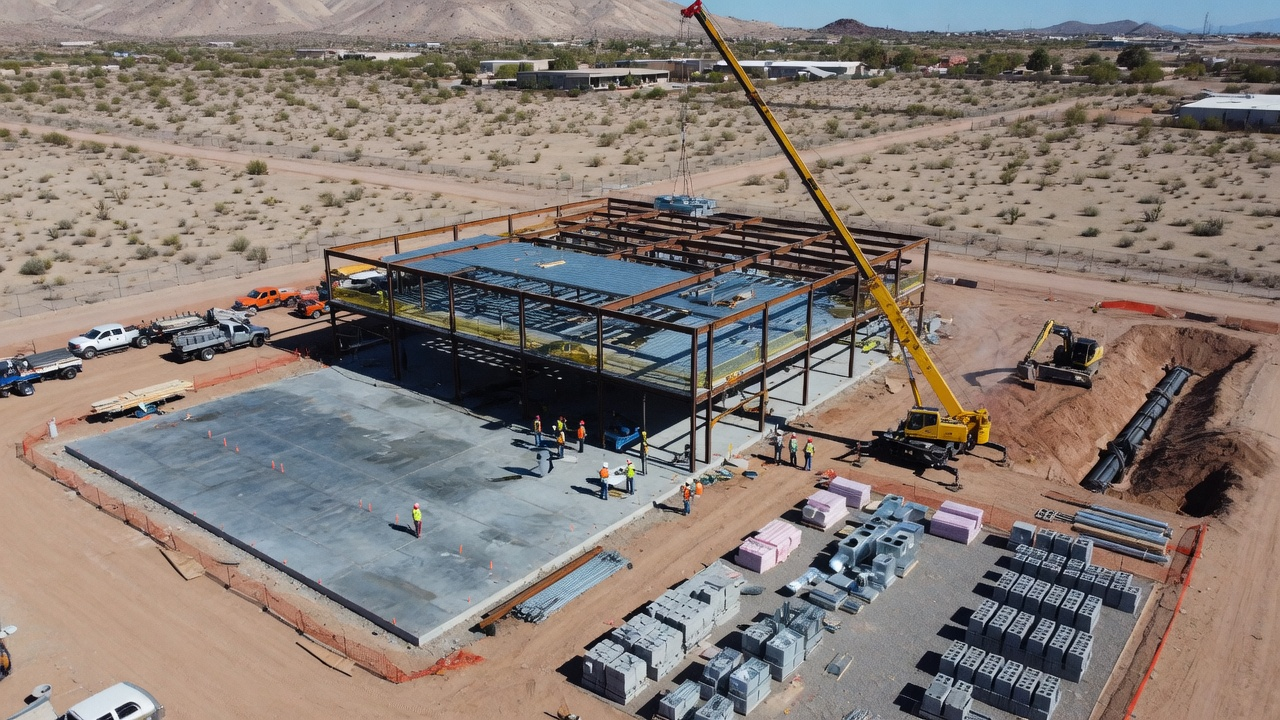
Why Construction Companies Are Making Drone Photography Standard Practice
Every construction project tells a story—from the first ground-clearing to the final punch list. The challenge has always been telling that story accurately, efficiently, and in a way that keeps everyone from investors to inspectors aligned on what's actually happening on the ground. Traditional methods of documenting construction sites involve a person walking the perimeter with a camera, climbing scaffolding for elevated shots, or renting boom lifts for a broader perspective. All of these take time, create safety risks, and still deliver an incomplete picture.
Drone photography changes the equation entirely. A single 30-minute flight captures what would take a ground crew half a day to document, from angles that are physically impossible to reach any other way. For construction companies across Benson, Willcox, Sierra Vista and greater Tucson, drone photography has moved from a nice-to-have novelty to a practical tool that reduces costs, prevents disputes, and delivers better outcomes on every project.
What Construction Drone Photography Actually Delivers
Drone photography for construction sites goes well beyond basic aerial snapshots. Understanding the full range of deliverables helps you decide what level of service fits your project's needs and budget.
High-Resolution Aerial Stills
Modern commercial drones capture images at 20 megapixels or higher, producing photographs with enough detail to identify individual materials, equipment positions, and work progress from several hundred feet in the air. A single aerial photograph of a construction site can show the entire footprint in context—the building pad relative to adjacent properties, staging areas, access roads, material storage, and perimeter conditions all visible in one frame.
These images serve multiple purposes: progress reports for owners and lenders, pre-pour documentation for concrete work, as-built verification against plans, and marketing material for developers who want to showcase active projects to prospective buyers or tenants.
Aerial Video Walkthroughs
Video captures what still photography cannot: the spatial relationships between different areas of a site, the flow of access routes, and the scale of work completed. A 2- to 3-minute aerial video flyover gives remote stakeholders the feeling of actually visiting the site without the travel time, safety training, or PPE requirements of an in-person visit.
For general contractors managing relationships with out-of-state owners or institutional investors, monthly aerial video updates reduce the number of in-person site visits required while keeping stakeholders more informed than traditional photo reports ever could.
Time-Lapse Compilation
When a drone operator returns to the same site on a regular schedule—weekly or monthly—the resulting images can be compiled into a time-lapse sequence that shows the entire build from start to finish. This isn't just visually impressive. Time-lapse compilations are used by developers for marketing upcoming projects, by general contractors for portfolio development, and by project managers to analyze the actual pace of construction against scheduled milestones.
Thermal and Inspection Imagery
Drones equipped with thermal cameras detect heat signatures that reveal issues invisible to the naked eye. On construction sites, thermal imaging identifies moisture intrusion in freshly sealed building envelopes, locates HVAC ductwork for verification against mechanical plans, confirms insulation coverage before drywall closes up wall cavities, and spots electrical hot spots in panel installations. Catching these issues during construction costs a fraction of what remediation costs after occupancy.
Six Ways Construction Companies Use Drone Photography
The value of aerial construction documentation extends across nearly every phase and function of a building project. Here's how teams are putting drone imagery to work in practice.
1. Pre-Construction Site Assessment
Before breaking ground, aerial photography establishes baseline conditions of the site and surrounding area. This documentation proves invaluable when neighbors claim construction damaged their property, when environmental conditions need to be recorded before disturbance, or when existing utility infrastructure needs to be mapped for connection planning. A thorough aerial survey of the site and its context before work begins costs a few hundred dollars and can prevent disputes worth thousands.
2. Progress Documentation for Lender Draws
Construction lenders release funds in scheduled draws based on verified completion of specific milestones. Aerial photography provides clear, objective documentation of progress that supports draw requests and reduces back-and-forth between the contractor, owner, and lender's inspector. An overhead photograph showing completed framing, mechanical rough-in, or roof installation is harder to dispute than a written percentage-complete estimate.
3. Safety and Compliance Monitoring
Aerial imagery reveals safety conditions across the entire site simultaneously, which is something no ground-level walkthrough can achieve. Project managers and safety officers use drone photographs to identify fall protection gaps, verify barricade placement, confirm proper material storage, and document housekeeping conditions. In Arizona, where OSHA's heat illness prevention focus adds another layer of compliance requirements, documenting shade structures, water stations, and rest area conditions from the air provides evidence of compliance that ground-level photos miss.
4. Stakeholder Communication and Reporting
Weekly or monthly aerial photographs transform project reporting from abstract descriptions into visual narratives. When a project manager tells an owner that steel erection is 60% complete, that statement carries significantly more weight when accompanied by an aerial photograph clearly showing the erected structure against the full building footprint. This level of transparency builds trust, reduces unnecessary site visits, and keeps decision-makers engaged without requiring them to interpret technical construction language.
5. Marketing and Business Development
Developers use aerial construction photography to market projects before completion. Showing prospective buyers or tenants that a project is actively progressing—with dramatic aerial imagery of the rising structure—creates urgency and confidence that ground-level construction fence photos never achieve. For general contractors, a portfolio of aerial construction photography demonstrates capability and professionalism in proposals for future work.
6. Dispute Resolution and Claims Documentation
Construction disputes over schedule, scope, and site conditions are common. Regular aerial documentation creates an objective timeline of exactly what happened and when. If a subcontractor claims they couldn't access their work area, an aerial photograph from that date shows whether the area was clear. If weather delays are disputed, aerial documentation shows site conditions on specific dates. This evidence is dramatically more persuasive in mediation or litigation than competing verbal accounts.
What Construction Drone Photography Costs in Arizona
Pricing for construction site drone photography depends on the scope of services, frequency, and project duration. Here's what to expect.
Single-Visit Documentation: $300–$600
A single site visit produces a comprehensive set of 30 to 75 aerial photographs covering the full site from multiple altitudes and angles, plus a short aerial video flyover. This is appropriate for milestone documentation, pre-construction baselines, or one-time project records. Turnaround is typically 24 to 48 hours for edited images.
Monthly Progress Documentation: $250–$450 per Visit
Recurring monthly visits at a reduced per-visit rate. The drone operator follows a consistent flight path each visit, producing directly comparable imagery that shows progress over time. Monthly packages typically include a photo set, short video, and a compiled comparison of current versus previous visits. For a 12-month project, monthly documentation runs $3,000 to $5,400 total.
Weekly Documentation: $200–$350 per Visit
High-frequency documentation for fast-track projects, phased construction, or projects where lender or owner requirements demand weekly updates. Weekly visits offer the best per-visit rate and produce the most detailed construction timeline. A 6-month project with weekly documentation runs $5,200 to $9,100 total—still a fraction of the cost of a single schedule dispute or failed lender inspection.
Comprehensive Project Packages: Custom Pricing
Large-scale or long-duration projects benefit from comprehensive packages that bundle aerial photography with thermal imaging, time-lapse compilation, and specialized deliverables like orthomosaic maps or volumetric measurements. These are quoted on a project basis after understanding the full scope of documentation needs.
Arizona-Specific Considerations for Construction Drone Photography
Construction drone photography in Arizona requires understanding the state's unique environmental and regulatory landscape.
Heat and Flight Conditions
Arizona summers push both equipment and operators to their limits. Drone batteries lose capacity in extreme heat, reducing available flight time per battery by 15% to 25% when temperatures exceed 110°F. Professional operators plan summer flights for early morning—often starting at sunrise—to capture images in cooler conditions with better lighting. This scheduling consideration doesn't affect image quality, but it does mean that summer flights need to be planned further in advance to secure early-morning time slots.
Dust and Monsoon Conditions
Arizona's monsoon season from July through September brings sudden dust storms, microbursts, and heavy rain that can shut down drone operations with little notice. Professional operators monitor weather conditions closely and build flexibility into scheduling during monsoon months. The upside is that post-storm documentation captures site drainage patterns, erosion issues, and storm damage that inform construction decisions and insurance claims.
Airspace: Most of This County Does Not Need LAANC
This is a genuine local advantage and it is worth understanding before you book anyone. Most of Cochise County is Class G airspace — uncontrolled, no FAA authorization required, no waiting. An operator based here can often fly the day you call. A Tucson or Phoenix operator working controlled airspace every day cannot make that promise, because they are used to filing and waiting.
Where it does get complicated locally:
- Tucson International (TUS) is Class C, not Class D — a distinction most “Arizona drone rules” pages get wrong. Davis-Monthan Air Force Base sits beneath the Class C shelf with its own Class D.
- Libby Army Airfield / Sierra Vista Municipal (KFHU) carries Class D from the surface to 7,200 ft MSL within a 4.7-mile radius, activated by NOTAM, with Class E extensions beyond that.
- Restricted areas R-2303A, B and C at Fort Huachuca cover roughly 946 square miles. Time of use is weekdays 0700–1700 local, other times by NOTAM. This is not airspace you negotiate — it is airspace you plan around.
If your site is in Sierra Vista, near the Tucson shelf, or anywhere in the Huachuca footprint, ask your operator which airspace class you are in and how they intend to clear it. An operator who cannot answer that immediately is telling you something.
Dust Control on a Cochise County Site
Cochise County's land clearing ordinance requires that dust be minimized using generally acceptable suppressants — and contains a clause worth reading twice: water, although generally accepted, is not preferred. That reads oddly until you consider where you are. Water sprayed on a valley floor in June evaporates in minutes, and this is a basin with an annual groundwater overdraft above 100,000 acre-feet.
Aerial documentation supports compliance either way. A single overhead frame showing suppressant coverage, stabilized access and perimeter condition across the whole site is considerably more useful in a compliance file than a handful of ground-level photos, and it is timestamped and geotagged.
The same imagery does double duty after a monsoon cell: post-storm coverage captures drainage behaviour, erosion and any off-site sediment movement, which matters because the ordinance also requires that erosion control measures not alter existing drainage patterns or cause property damage off site.
How to Get Started with Construction Drone Photography
Adding aerial documentation to your construction project is straightforward, but a few steps early in the process ensure you get maximum value.
Start Before You Break Ground
The most valuable drone photographs on any construction project are often the ones taken before work begins. Pre-construction baseline imagery establishes existing conditions of the site, adjacent properties, roads, and utilities. Schedule your first flight before any equipment arrives on site.
Establish a Consistent Schedule
Regular documentation at consistent intervals—weekly or monthly—produces the most useful project record. Work with your drone photography provider to set a recurring schedule that aligns with your reporting cycles and milestone dates. Consistency in timing and flight paths makes progress comparison effortless.
Integrate with Your Project Management Workflow
Drone imagery is most valuable when it's accessible to everyone who needs it. Discuss delivery format and timing with your provider so images arrive in time for owner meetings, lender inspections, or progress reports. Most professional operators deliver images through cloud-based platforms that allow your entire team to access, download, and share images without email attachment limitations.
Stronghold Precision Aerials: Construction Photography Across Arizona
We work with general contractors, developers, and construction managers across the Tucson metro area and Southern Arizona. From single-visit milestone documentation to year-long weekly progress packages, we tailor our services to fit your project's scope, schedule, and budget.
Every flight is conducted by FAA Part 107 certified pilots with construction industry experience. We understand the difference between a pretty aerial photograph and documentation that actually serves your project's needs—from lender draw support to dispute-ready evidence. Our images are delivered on time, every time, with the consistency and quality your project demands.
Get a Quote for Your Construction Project
Tell us about your project—location, duration, and documentation needs—and we'll put together a package that covers what matters most to your team and your stakeholders.
Construction Progress
Scheduled aerial documentation for construction sites: progress stills, overview video, orthomosaics, stockpile volumetrics and completion timelapse. Monthly, bi-weekly or weekly retainers.
See what is includedWorking on something in Cochise County?
Part 107 certified, insured, and based in the Sulphur Springs Valley — so there is no travel surcharge on work in the valley, and no LAANC delay across most of the county. Tell us what you need flown.
Keep reading
How Drones Are Transforming Construction Progress Monitoring in Southern Arizona
Discover how drone-based construction monitoring saves Arizona builders 50-70% on surveying costs. Learn about orthomosaic mapping, 3D modeling, and real-time progress documentation for your next project.
Airspace & RegulationFlying Near the Electronic Proving Ground: GPS and RF Interference in Southern Cochise County
Fort Huachuca is one of the few places in the country cleared for open-air GPS testing, and the terrain that makes it suitable is the same terrain your listing sits in. What that means for a drone, and how we fly differently because of it.
AgricultureCenter Pivot Inspection From the Air in the Sulphur Springs Valley
A blocked nozzle, a leaning tower or a wheel track cutting a rut does not announce itself from the pickup. On 108,237 irrigated acres in a basin under an AMA, uniformity is now a compliance issue as well as an agronomic one.
Real EstateDrone Photography for Tucson Listings: Class C, Davis-Monthan and the Shelf
Tucson International and Davis-Monthan share one Class C, and the outer shelf reaches further than most people expect. What that means for scheduling a listing shoot in the metro, and where the automated approvals stop.